Nexus Insurance
Redesigning a data-heavy quotation workflow around intent to prioritize clarity and operational velocity.
Insurance
B2B

This case study is based on professional experience in a regulated enterprise environment. Visuals have been deliberately generalized, simplified. The content reflects my design approach and decision‑making.
Role
Product Designer (UI/UX)
Team
Project Manager (project initiation & requirements)
Developers (feasibility & implementation alignment)
Me
Platform
Desktop
Duration
4 months
Insurance brokers manage complex, extensive quotation workflows. The existing tool was outdated and fragmented: no status overview, limited validation, and no specific flow based on goal/task.
I redesigned a broker quotation tool that provided two distinct workflows based on the goal and introduced a real-time dashboard, transforming a fragmented, error-prone process into a system built around how brokers actually work.
Impact 1
Faster quotation process
Brokers could quickly complete simulations and formal quotations, thanks to the step-by-step approach.
Impact 3
Reduced cognitive load
The dashboard gave brokers a real-time overview of every quote's status and next required action.
Impact 4
Increased focus
Splitting simulation and formal quote into two distinct flows let brokers focus on what mattered at each moment.
Context
The problem: two goals, one flow, no overview
The existing quotation tool was outdated and fragmented, and did not offer an overview of the tasks and their status.
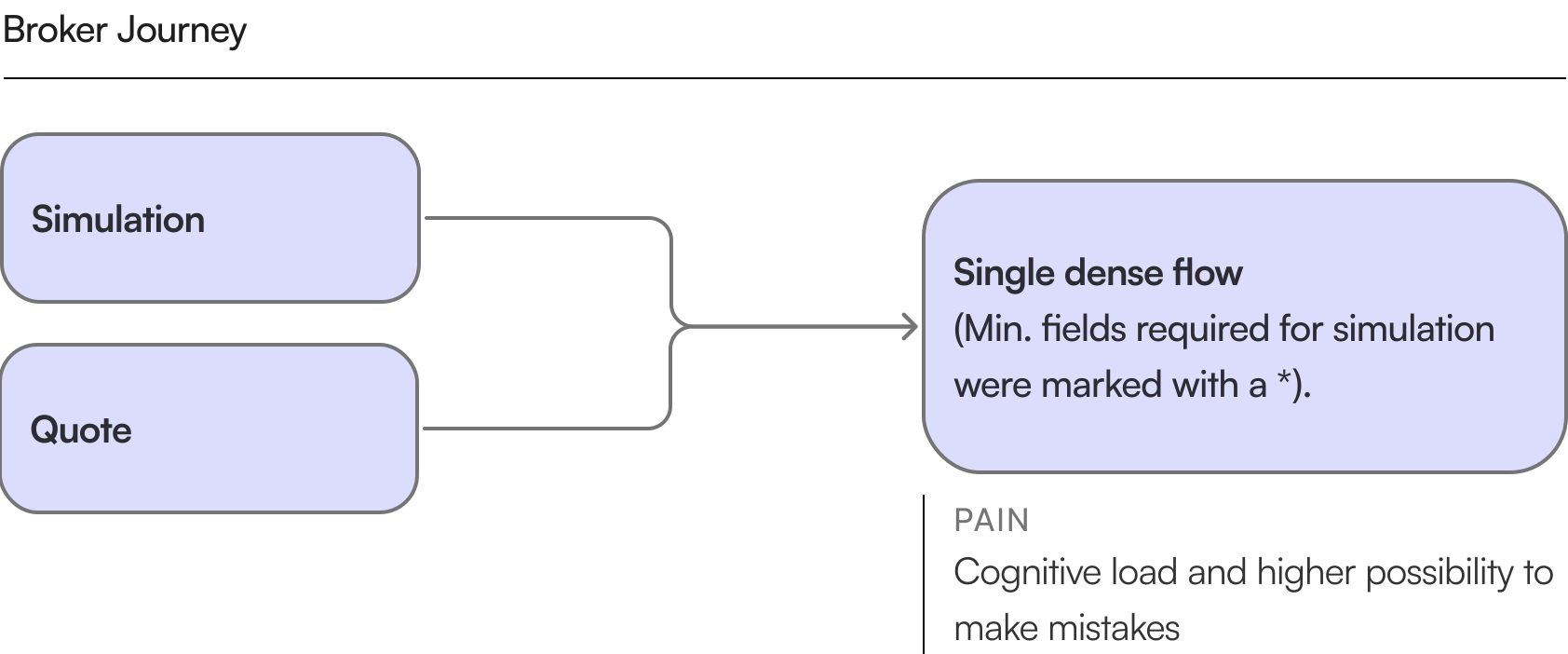
Brokers used the platform for two distinct purposes: simulating a quote and generating a formal one. A single shared flow meant they had to manually check which mandatory fields applied to their task.
Broker task analysis
Main findings
Finding 2
No visibility over active quotes
Brokers were missing time-sensitive items. No real-time overview of where quotes stood, what needed action, or which submissions were at risk of expiring.
Finding 3
Complexity without structure
Dense input fields made data entry overwhelming and error-prone, lacking guidance on progression or validation to catch mistakes before submission.
The problem was that the system treated the two tasks identically, forcing full data entry regardless of intent. Furthermore, no overview was provided to support the work and avoid mistakes.
My role
How did I solve it?
🕵️♀️ Discovery
I worked starting from a brief, collaborated with PM to understand broker workflows and map the problem.
✏️ Design
I led the design development, owned the interaction model and key structural decisions.
🚀 Validation
I conducted 8 semi-structured sessions with brokers across three focus areas.
📑 Handover
I prepared documentation and assets for handoff to development team.
Design direction
Three decisions, one structural logic
The three findings pointed directly to three design principles that became the foundation of the solution.
Before

Each individual input field was marked for simulation or quote generation.
After

*Already filled in fields, if simulation has been run.


Alternative solution
A second solution has been designed, as single-page form, which was preferred by the client. Usability testing with both approaches showed step-by-step was clearly better understood and less error-prone, giving me the evidence to override the preference.


Research and validation
Validating the decisions with brokers
8 semi-structured usability sessions conducted with brokers around three focus areas, each tied directly to a key design decision.
Method
Semi-structured interviews
Outcome
8/8 Brokers navigated the two flows without guidance during usability testing, confirming the structure matched their mental model from the first interaction.
Research focus
Focus 1:
The two flows
Validate whether brokers immediately understood the distinction between simulation and quote without explanation.
Finding: 8 out of 8 brokers understood the difference and setup the right expectations of the two flows.
Focus 2:
The dashboard
Test whether the status overview and next-action CTAs gave brokers enough clarity, especially if expiring quotes were visible enough.
Finding: Expiring quotes were being missed — action labeling was adjusted, directly shaping the final prioritization logic.
Focus 3:
Step-by-step vs one-page form
Identify which approach (single page vs multi-step), testing how they could navigate data entry more accurately.
Finding: Step-by-step was clearly better understood and less error-prone, overriding the client's one-page preference with evidence.
Outcome
What changed
The redesign changed not just how brokers generated quotes, but how they thought about the task itself.
By separating simulation from formal submission and giving brokers a clear overview of their work, the tool became a genuine operational support.
Outcome 1
Two flows, two goals: clarity by design
Separating simulation and quote generation gave brokers a clear structure at every stage, reducing cognitive load.
Reflections
What I learned
This project reinforced that simplifying enterprise software doesn't mean reducing complexity: it means structuring it.
Designing for brokers required respecting domain rules while creating systems that guide, rather than constrain, user behavior.
It also showed the value of letting research make the call. The step-by-step vs one-page decision wasn't resolved by opinion, it was resolved by putting both in front of brokers and observing what happened. That's a more powerful argument than any design rationale.
What worked well ✅
Structural diagnosis over surface fixes
The most impactful decision was recognizing that two flows were needed, not one cleaner flow.
Trusting the research over the brief
When usability testing clearly showed step-by-step outperformed the one-page solution, the research gave us the confidence to push back on the client's preference.
Designing around broker goals
Structuring the tool around what brokers were actually trying to do made the experience feel purposeful.
What I'd do differently ❌
Define success metrics upfront
The outcomes are strong qualitatively, but there are no hard numbers beyond 8/8. Setting measurable goals at the start (error rates, time on task, submission completion) would have made the impact far more concrete and easier to defend.
Push for a longer discovery phase
The brief-led process meant limited time to understand broker workflows deeply before designing. More structured discovery upfront might have surfaced the simulation vs quote distinction even earlier
Do you want to know more about it?
Other case studies
